
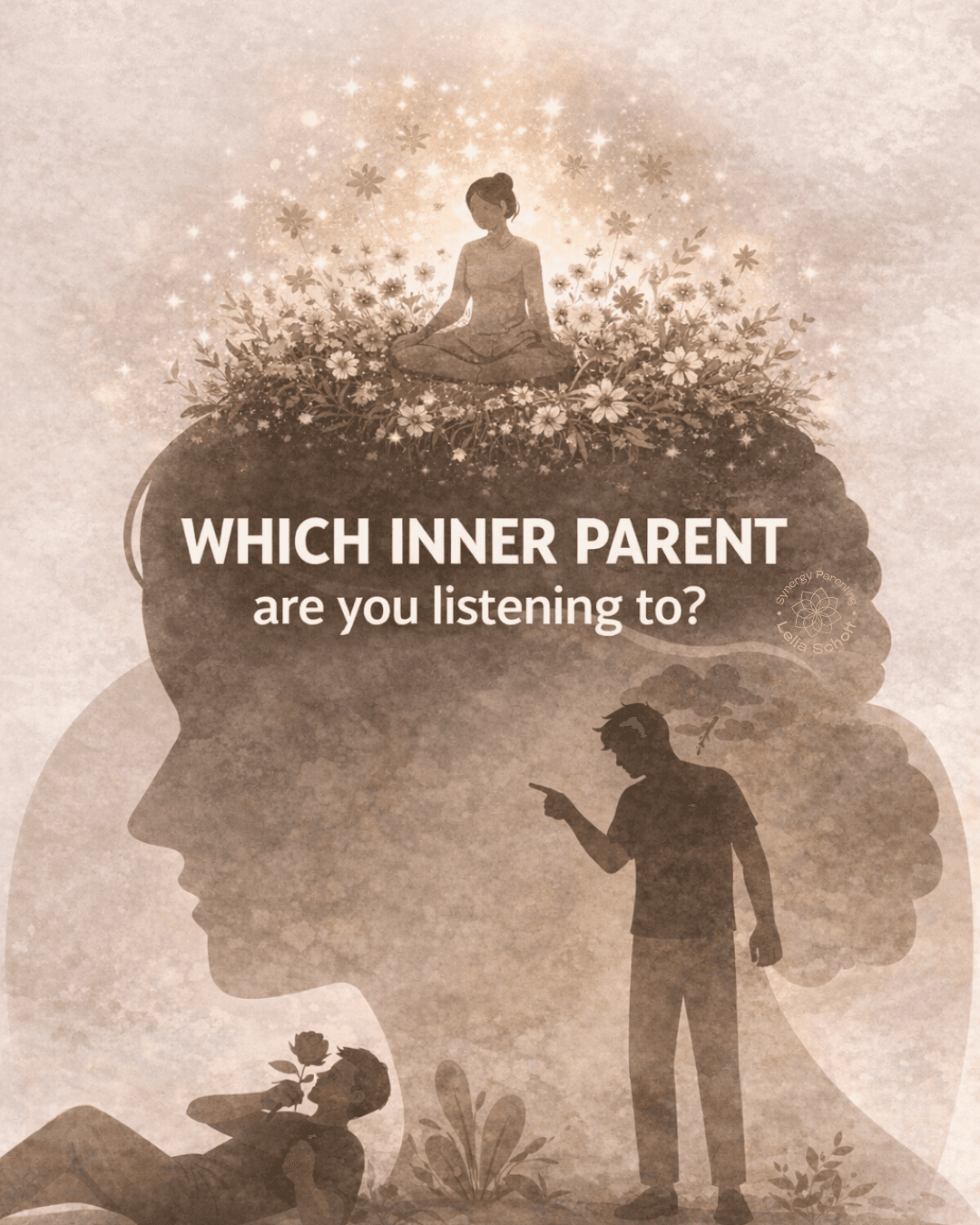
The Inner Parent You’re Listening To
Published: Invalid Date
The Inner Parent You’re Listening To
We all carry an inner voice that guides us.
Sometimes it’s steady.
Sometimes it’s permissive.
Sometimes it’s harsh.
The difference matters.
When I speak about the “inner parent,” I’m using a metaphor.
These aren’t separate personalities. They are patterns your nervous system developed based on how your emotions were responded to and how safety was created around you.
Over time, those responses become automatic.
The Passive Inner Parent
When stress rises and capacity drops, we often swing here.
This voice avoids discomfort.
It gives in.
It goes quiet.
It might say:
It’s fine.
Don’t say anything.
Just stay up.
Skip it.
Over time, this can look like neglecting your needs, staying silent in painful dynamics, or abandoning yourself to keep the peace.
There is no judgment here.
This is often a nervous system in freeze or fawn — a strategy that once protected you.
The Punitive Inner Parent
Sometimes we swing the other way.
Instead of giving in, we push through with pressure.
This voice might say:
You should be better.
What’s wrong with you?
Get it together.
It may create productivity — but through shame.
Research consistently shows that shame activates threat physiology and increases stress, which undermines sustainable change. It feels firm, but it is not safe.
The Connected Inner Parent
This is the part of you that coaches and nurtures you.
It helps you name your feelings.
Notice your needs.
Choose the values you want to live by.
It isn’t reactive.
It isn’t avoidant.
It doesn’t disappear when things feel hard.
It might say:
Can we name what you’re feeling?
Let’s make something nourishing.
Have you had water today?
One step at a time.
You don’t deserve that.
It’s time for bed.
It holds compassion and structure together.
It chooses what supports you long-term, not just what soothes you in the moment.
Reflection
None of these parts are bad.
They are adaptations.
At some point, each one protected you.
But only one truly supports long-term wellbeing:
the connected, firm, loving voice.
The work is not becoming someone new.
It is strengthening the connected, compassionate part of you so it can guide the overwhelmed parts, soothe the shamed parts, and gently lead you back into safety.
And when you learn to parent yourself with connection, it naturally shapes how you respond to the children in your life too.
Not to judge yourself.
Just to notice.
• Which inner parent shows up most often for you?
• What helps you return to connection — rest, boundaries, support, prayer, therapy, solitude?
♥︎