The T.U.R.N. Practice: A Mini Workshop for the Heart
Published: Invalid Date
Dear Friend,
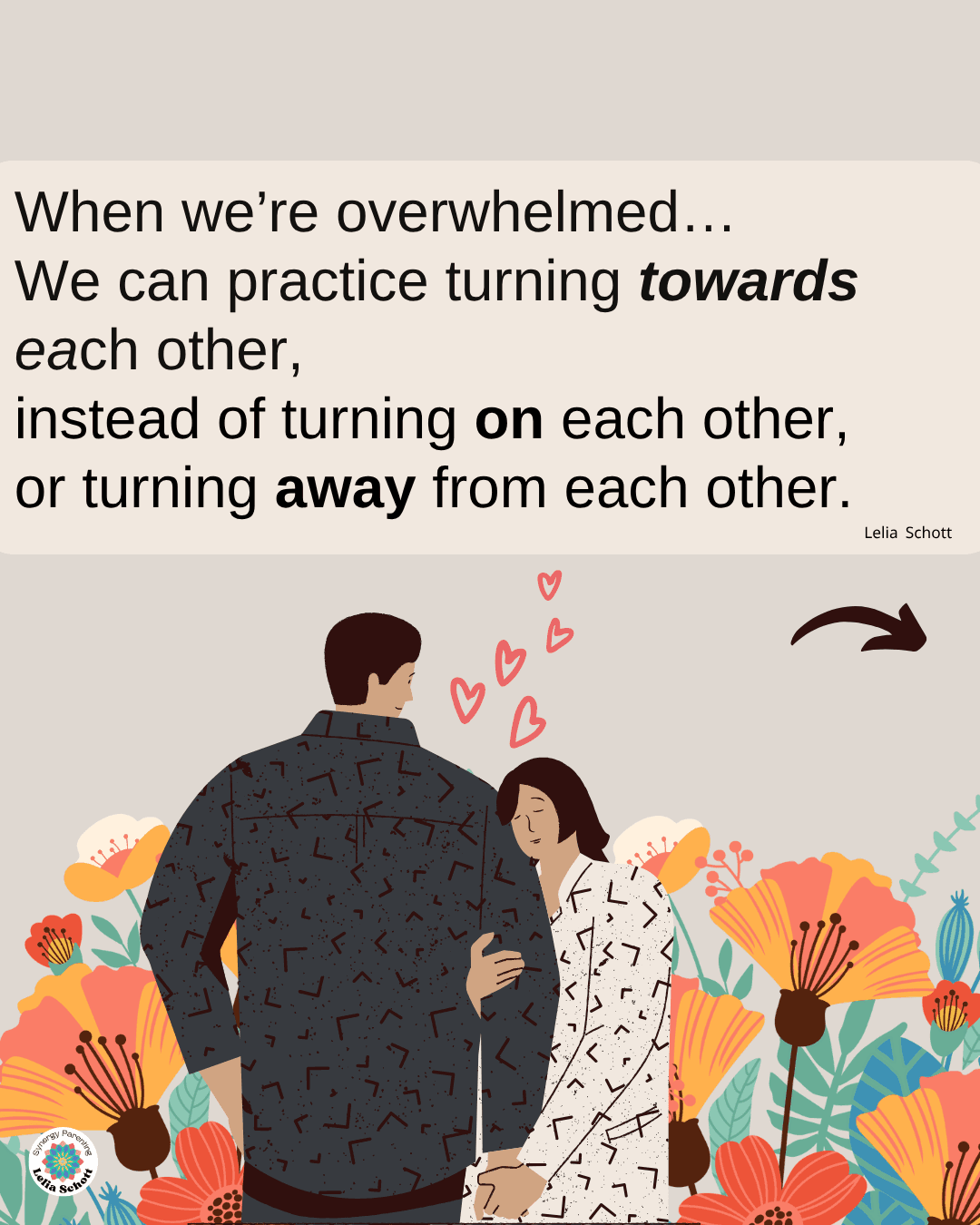
When we’re overwhelmed, our nervous systems don’t always reach for connection,
they reach for protection.
We turn on each other or away from each other,
when what we most need is to turn toward one another.
But there’s another way.
One that honours both our biology and our belonging ,
and helps us move from reaction to restoration.
Today, I’m sharing a little mini workshop —
bite-sized, heart-based wisdom you can return to anytime. 🌱
✧ The T.U.R.N. Practice ✧ ™️
A framework for responding with connection, not reactivity.
🌿 T — Trust
Trust that turning toward each other with curious compassion —
instead of blame, shame, or judgment —
helps us move from anxious to anchored.
When we trust safety enough to stay,
we begin to rewire our patterns of protection into pathways of connection.
🌿 U — Understand
Understand by listening for the:
♡ unmet need
♡ unheard feeling
♡ undeveloped skill
beneath the reaction.
This shifts us from fault-finding to safety-creating.
Instead of asking “What’s wrong with you?” we begin to ask,
“What happened to you?” and “What do you need?”
🌿 R — Respectfully Repair
♡ Regulate with slow breaths
♡ Request what you need
♡ Reclaim responsibility for what’s yours
♡ Release what’s not
Repair isn’t about getting it perfect — it’s about returning.
Every moment we choose to come back to connection,
we teach our children (and our own inner child)
that relationships can stretch and mend.
🌿 N — Negotiate
When conflict arises, we can negotiate connection instead of control.
Dr. Marshall Rosenberg — whose life’s work inspired this practice — taught:
“No matter what is said, hear only feelings, needs, observations, and requests.”
We’re all just trying to meet our needs in the best way we know how.
A simple question can transform tension into tenderness:
“Are you feeling ____ because you need ____?”
💬 How to Practise Nonviolent Communication (NVC) in Daily Life
1️⃣ “When I see/hear/notice…”
2️⃣ “I feel…”
3️⃣ “Because I need/value…”
4️⃣ “Would you be willing to…?”
Example:
“When I see you on your phone while I’m struggling with the kids,
I feel frustrated because I’m needing support.
Would you be willing to put it down during bedtime?”
Simple, but powerful — because it shifts the focus from blame to belonging.
🌸 The Power of Practice
In any moment, there are two ways to deepen connection:
1️⃣ Vulnerably express our own feelings and needs.
2️⃣ Empathically listen to those of another.
These choices may not come naturally if we were raised in homes
where needs were shamed or ignored.
But each pause, each breath, each softening
builds a new pattern of presence.
💛 What NVC Is Not
NVC is not about being nice — it’s about being real.
It’s not about stifling intensity — it’s about transforming it.
It’s not about changing others — it’s about deepening understanding.
It’s not a formula — it’s a practice of awareness and compassion.
When we practise NVC, we learn to stay connected –
to truth, to ourselves, and to one another.
🌿 A Pause for Parents
Be the one who turns toward a struggling child —
instead of turning on them or away.
That simple turn can change a nervous system, a moment, a life.
✨ Pause & Breathe
When tension rises, take one slow breath,
soften your body, and whisper inwardly:
I can turn toward connection — even here, even now.
🌸 With Gratitude
This T.U.R.N. practice is inspired by the life and work of Dr. Marshall Rosenberg,
the founder of Nonviolent Communication.
His teachings continue to ripple through the world,
reminding us that empathy isn’t a technique, it’s a way of being.
May his work, and the heart behind it,
live on in our homes and our humanity. 💛
🌿 If this resonates…
✨ Save this email for the next time you feel reactive.
🌱 Share it with someone learning to communicate with compassion.
💛 Or join me for a 1:1 coaching session or course to deepen your practice.
With warmth and synergy,
Lelia Schott
📌“When we turn toward each other with understanding instead of urgency,
we create the conditions for healing.”